Abstract
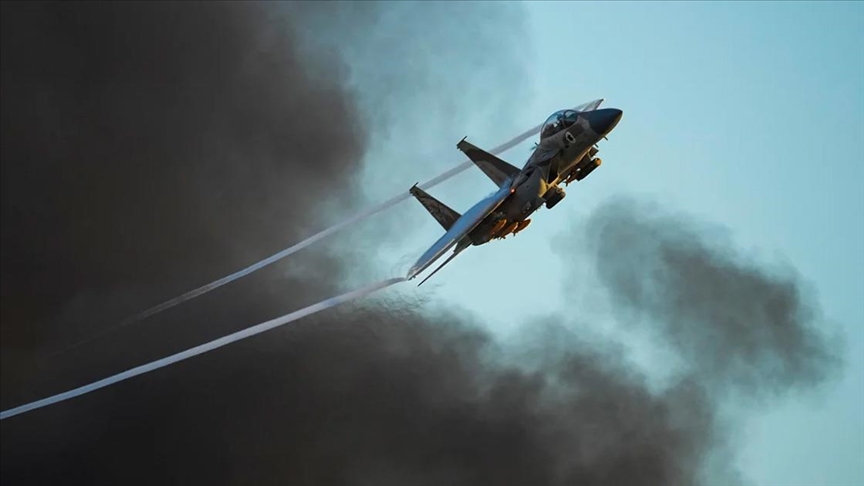
This policy paper examines the escalating military confrontation between the United States, Israel, and Iran following airstrikes launched on February 28, 2016. The paper analyzes the immediate military outcomes, including targeted attacks on Iranian leadership and infrastructure, regional retaliation, and the involvement of Kurdish militias. The broader strategic implications for U.S. foreign policy and the Middle East balance of power are evaluated, with a focus on Trump’s high-stakes regime change approach. Additionally, the paper explores China’s perspective on U.S. wars and its expanding influence in the global order, highlighting Beijing’s strategic opportunities amid U.S. military overextension. The study underscores the risks of regional instability, power vacuums, and potential multipolar conflicts resulting from unilateral military interventions.
Keywords
Iran, Israel, United States, China, Middle East, Trump, airstrikes, regime change, regional escalation, Kurdish militias, strategic power, Strait of Hormuz, U.S.–China rivalry
- Introduction: Trump’s Regime Change Strategy
On February 28, 2016, the United States and Israel launched a series of airstrikes against Iran. The targets included several sites in Tehran, including the presidential palace. Israel named the operation “Operation Lion’s Roar” (שאגת הארי), while the United States referred to it as “Epic Fury.” Iran’s retaliatory campaign was called “Operation True Promise.”
The initial strikes reportedly targeted senior officials and military leaders, including Iran’s Supreme Leader, Ali Khamenei. Trump declared that the purpose of the strikes was to destroy Iran’s missile and military capabilities, prevent the country from acquiring nuclear weapons, and weaken or potentially topple the regime.
In response, Iran launched dozens of ballistic missile attacks across the Middle East, targeting locations in Israel, Jordan, Syria, Kuwait, Bahrain, Qatar, Saudi Arabia, and the United Arab Emirates. At the same time, the United States reinforced its air and naval presence in the region by deploying aircraft carriers, air defense systems, and fighter jets, aiming to pressure Iran and prepare for the possibility of a broader military confrontation.
1-1 Historic Strikes, Retaliation, and Rising Tensions Across Borders
Israel declared a nationwide state of emergency, stating that the strikes against Iran were the largest military operation in its history. Schools and workplaces were closed across the country. In Iran, a renewed “near-total” internet blackout was reported, with the monitoring organization NetBlocks indicating that internet connectivity had dropped to approximately 4% of normal levels.
On March 2, Iranian strikes were reported in Dubai, Abu Dhabi, Doha, and Beersheba. Two oil tankers—the Stena Imperative and the Athe Nova—were also reportedly attacked.
Three U.S. McDonnell Douglas F-15 Eagle fighter jets were reportedly shot down over Kuwait.
Israel and the United States also targeted several sites in Iran, including the Natanz Nuclear Facility. Strikes reportedly hit the Khatam al-Anbia and Gandhi hospitals. A double strike on Niloufar Square in Tehran reportedly killed more than 20 civilians.
On March 3, Israeli and U.S. forces launched additional strikes, reportedly destroying the headquarters of Iran’s Supreme National Security Council and what Israeli officials described as an underground nuclear facility called “Minzadeh.” Bushehr Airport was also targeted, damaging the terminal building and destroying an Airbus A319 aircraft (registration EP-IEP). These strikes occurred approximately 12 km (7.5 miles) from the Bushehr Nuclear Power Plant.
U.S. forces reportedly inflicted significant damage on Iranian naval capabilities, particularly in the Gulf of Oman. Israel also reported the killing of Davoud Alizadeh, described as a commander in the Quds Force responsible for operations related to Lebanon, and the detention of dozens of Hezbollah members following a missile attack.
Debris from an Israeli–U.S. airstrike also damaged the historic Golestan Palace in Tehran, which is recognized as a UNESCO World Heritage Site.
On March 4, Israeli and U.S. strikes resumed. The Israeli Air Force shot down an Iranian Yakovlev Yak-130 training aircraft using a Lockheed Martin F-35A Lightning II fighter jet, reportedly marking the first time an F-35 had downed a manned aircraft in combat. The Israel Defense Forces (IDF) stated that an F-35A “Adir” shot down the Iranian aircraft over Tehran. This was followed by Iranian retaliatory actions and strikes attributed to Hezbollah.
In Qatar, authorities arrested ten individuals accused of operating a cell affiliated with the Islamic Revolutionary Guard Corps and gathering intelligence on military infrastructure. Some suspects were reportedly trained in the use of drones. The Al Udeid Air Base—described as the largest U.S. military base in the Middle East—was also reportedly targeted, according to the Qatari Ministry of Defense.
The Ras Tanura Refinery, owned by Saudi Aramco, was targeted by an unidentified missile. Meanwhile, a ballistic missile was intercepted in Turkey near the city of Dortyol. According to a senior U.S. military official, the missile was shot down by a RIM-161 Standard Missile 3 launched from the U.S. Navy destroyer USS Oscar Austin (DDG-79). A Turkish official indicated that the missile had been heading toward “Greek Cyprus.”
The Iranian frigate IRIS Dena was reportedly sunk in the Indian Ocean by U.S. Navy submarines approximately 40 nautical miles (74 km) south of Galle, Sri Lanka. It became the first warship reportedly sunk by a submarine in active combat since the sinking of the ARA General Belgrano during the Falklands War. Thirty-two crew members were rescued, while more than 100 remained missing. At least 78 people were reported injured in the initial attack.
On March 5, Iran confirmed that it had targeted Kurdish armed groups in Iraq and warned separatist movements as the conflict escalated. Iranian forces also launched missiles toward Israel and targeted a U.S. oil tanker in the Persian Gulf.
In response, Israel launched strikes in Tehran and reportedly targeted areas near Nakhchivan International Airport in the Nakhchivan Autonomous Republic of Azerbaijan.
A joint U.S.–Israeli strike also destroyed a 12,000-seat indoor sports hall within the Azadi Sports Complex in Tehran. Reports indicated that some stadiums and sports centers were being used to assemble and deploy military personnel, vehicles, and equipment, allegedly to protect them from U.S. and Israeli airstrikes.
1-2 Middle East Inferno: The Countdown to All-Out War
The airstrikes on Iran began at approximately 9:45 a.m. Iranian time on Saturday, February 28. The United States used a combination of missiles and drones, while the Israeli Air Force deployed fighter jets and Tomahawk cruise missiles. The U.S. military also reportedly employed HIMARS systems, in addition to other long-range weapons.
The Israeli Air Force announced that it targeted around 500 military sites in western and central Iran, including air defense systems and missile launchers, with the participation of approximately 200 fighter jets. This operation was described as the largest combat sortie in Israel’s history. Israel referred to the initial wave of attacks as “Operation Formation.”
Israeli Prime Minister Benjamin Netanyahu declared that Israel and the United States had launched strikes against Iran “to eliminate the existential threat” posed by what he described as “the Iranian regime of terror.” Netanyahu accused Iran’s leadership of decades of hostility, stating that “the Ayatollahs’ regime has chanted ‘Death to Israel’ and ‘Death to America’ for 47 years,” and argued that Iran must not be allowed to possess nuclear weapons.
1-3 Iranian Response in the Gulf Region
The Ministry of Defense of the United Arab Emirates announced the death of one person in Abu Dhabi following the interception of Iranian ballistic missiles, describing the incident as a “blatant attack” and a “dangerous escalation.” Dubai International Airport was also reportedly targeted. These attacks led to widespread flight suspensions and the near-complete closure of airspace across large parts of the region.
The attacks then extended to Bahrain, where explosions were reported in the capital, Manama. The headquarters of the U.S. Fifth Fleet reported that Bahrain International Airport had been targeted by a drone.
Meanwhile, Qatar intercepted two waves of missile attacks and confirmed that there were no injuries or property damage. Reports also indicated that Iranian missiles struck Jordanian territory, including areas near the capital, Amman. Kuwait was also targeted with ballistic missiles, including an attempted strike on Kuwait International Airport.
Saudi Arabia confirmed that Iranian attacks targeted Riyadh and the country’s Eastern Province but stated that its air defense systems successfully intercepted the incoming missiles.
1-4 Strikes in Iraq and Continued Escalation
In Iraqi Kurdistan, Iranian airstrikes targeted infrastructure hosting American military and civilian personnel, including Erbil International Airport and the U.S. Consulate General in Erbil.
Ali Larijani, a senior Iranian political figure, announced the formation of a provisional leadership council and accused the United States and Israel of attempting to dismantle Iran. He warned that “separatist groups” would face severe consequences if they attempted to exploit the situation.
On the morning of March 1, Israel launched another wave of strikes against Iranian targets. U.S. Air Force Northrop Grumman B-2 Spirit bombers attacked fortified ballistic missile sites using 2,000-pound bombs. U.S. Navy Boeing F/A-18 Super Hornet and Lockheed Martin F-35 Lightning II fighter jets were also deployed, supported by Tomahawk cruise missiles and drones.
Media reports later indicated that missiles struck a nine-story building in northern Israel, while additional strikes were reported in the cities of Haifa and Tel Aviv.
1-5 Regional Escalation
Israel and Hezbollah exchanged fire along the Lebanese border. Hezbollah described its attack as a “defensive act” following more than a year of Israeli strikes. The group stated that it had resumed hostilities to pressure Israel to halt its operations and withdraw from areas of Lebanese territory it had occupied. A spokesperson for the Israel Defense Forces (IDF) described the attack as “a formal declaration of war by Hezbollah” and vowed to “neutralize” the threat.
The Royal Air Force base at RAF Akrotiri was reportedly attacked by a drone. Following another attempted strike on Cyprus, Greece announced the deployment of naval frigates and General Dynamics F-16 Fighting Falcon fighter jets to support the island’s defense against potential further attacks.
The Iranian-backed militia group Kata’ib Hezbollah claimed responsibility for attacks targeting the Victory Base Complex near Baghdad International Airport and locations in Erbil in Iraqi Kurdistan. The umbrella group Islamic Resistance in Iraq also claimed responsibility for more than 23 drone attacks on U.S. military assets in Erbil.
1-6 Kurdish Militias
Donald Trump signaled openness to supporting armed Kurdish militias in Iran, which have been in conflict with Tehran for decades and have become regional allies of the United States. He intensified strikes in predominantly Kurdish areas of western Iran (Iranian Kurdistan), targeting police stations and border posts along the Iraqi–Iranian border, claiming that these operations “paved the way for Kurdish advances.”
The Kurdistan Region hosts several armed Iranian Kurdish opposition groups that have declared their readiness to help overthrow the Iranian government under the umbrella of the Alliance of Political Forces of Iranian Kurdistan (CPFIK). According to ITV News, weapons were smuggled into western Iran to arm thousands of Kurdish volunteers. These reports were echoed by CNN, which reported that the Central Intelligence Agency (CIA) was working to arm Kurdish forces in an effort to incite an uprising in Iran.
1-7 Airspace Closure
The escalation resulted in a near-empty airspace over Iran and surrounding regions. Several countries—including Bahrain, Iraq, Israel, Kuwait, Qatar, Syria, and the United Arab Emirates—temporarily closed their airspace as a precaution.
1-8 Closure of the Strait of Hormuz
Iran’s Islamic Revolutionary Guard Corps (IRGC) announced the closure of the Strait of Hormuz to maritime traffic, citing the interception of high-frequency radio communications. Officials declared that “no ship is permitted to pass through the Strait of Hormuz” until further notice.
2- From Venezuela to Iran: Trump’s High-Stakes Regime Change Plan
What does Donald Trump want from the world now? This question is being raised in newspapers and political analyses. The Wall Street Journal reported on what it described as a new strategy adopted by the U.S. president to change regimes around the world. This strategy involves launching military strikes to weaken the ruling leadership, then leaving the fate of the regime to the people to decide, according to his statement, “We bomb, you decide.” U.S. administration officials describe this as “strike the head and leave the rest to take care of.”
The government was democratic, but now the mission and model is to target senior leaders and pave the way for internal forces to assume power without a large-scale U.S. ground intervention. However, in the case of Venezuela, when Washington attempted to oust President Nicolás Maduro through a limited military operation, it left the rest of the government institutions intact, believing that Venezuelans themselves should drive a political transition.
In Iran, where Trump called on Iranians to overthrow the regime after the assassination of Supreme Leader Ali Khamenei in U.S. and Israeli strikes, similar to what happened in Iraq, military pressure was exerted from the air, and attempts were made to encourage internal forces to rise up against the government and create chaos within the country, starting with Kurdish groups, before seizing power from within.
Attempts to overthrow foreign leaders in Iran have been ongoing since the 1953 Iranian coup d’état, continuing through interventions in Vietnam and Chile in the following decades, in a strategy based on covert operations and pressure campaigns.
In this century, the United States engaged in two of its longest wars, in Afghanistan and Iraq, after military operations that toppled regimes it considered a threat to U.S. national security. However, these wars failed to establish effective governance, and now Trump is attempting to return to this pattern. American governments have historically tried to avoid prolonged military entanglements abroad. But the primary objective of the Middle East wars, according to the U.S. administration, was to achieve strategic gains such as access to oil, reducing immigration and drug flows, and weakening and controlling the Middle East without risking large-scale ground troop deployments, as occurred in the Iraq and Afghanistan wars. This trajectory began with the Arab Spring uprisings and regime changes, followed by the fragmentation of states and the struggle over energy resources.
This reflects Trump’s rejection of what he calls “nation-building,” which he believes has failed and cost the United States long and expensive wars. He prefers working with governments that align with U.S. interests and through which tangible gains can be achieved. Trump’s allies say that if the new leaders supported by Washington fail to meet the administration’s expectations, it will simply reset the game. Republican Senator Lindsey Graham stated, “We are creating a new model. We will give you a chance, and you decide what you want to do. If they elect a new group that wants to kill Americans, we will kill them.”
This points to a model of American global dominance, with Israel acting as its strategic ally in the Middle East. However, this policy generates significant risks, as military strikes could lead to a power vacuum or internal conflict, as happened in Libya after the overthrow of Muammar Gaddafi in 2011. Iran, like other authoritarian regimes, possesses powerful security apparatuses that could prevent a popular uprising, meaning that relying solely on air power may not be sufficient to bring about genuine political change.
The Trump administration is now searching for figures within targeted regimes who could assume power after the current leadership is weakened, similar to what has been called the “Venezuela model.” However, this model may be difficult to replicate because Iran is a state with strong religious cohesion rooted in Shia Islam.
Meanwhile, there is growing concern in Washington that strikes against Iran could create a political vacuum or internal conflict. This raises a broader question in American policy: can regimes be changed from the outside without assuming responsibility for what happens after their collapse?
3- Beijing’s Quiet Power Play: How China Sees Trump’s Wars as Opportunity”
The United States declared a global war on terrorism following the September 11 attacks in 2001. This included the invasion and occupation of Afghanistan in 2001 and Iraq in 2003, as well as broader geopolitical visions such as the “New Middle East” or “Greater Middle East,” which aimed to promote democratic governance under American influence.
The total cost of these wars is now estimated at nearly six trillion dollars. This period marked the beginning of a prolonged wave of wars and destruction across parts of the Muslim world, extending from Afghanistan to Gaza and Lebanon, and including Iraq, Yemen, Syria, Libya, and Sudan. The conflicts resulted in millions of casualties and displaced persons, as well as deep political, economic, and social disruptions.
The United States’ focus on the War on Terror coincided with the rapid rise of China economically, politically, and strategically. The rise of Xi Jinping to leadership of the Chinese Communist Party and the presidency marked a new phase in Chinese politics. This phase has been characterized by the expansion of Chinese power, its ability to respond to Western pressure, and its growing international presence through the Belt and Road Initiative.
China has also strengthened its military and technological capabilities while asserting its strategic position in the South China Sea. In this context, some analysts argue that Trump’s wars and confrontational policies provide China with strategic opportunities rather than direct threats.
Trade disputes have affected relations between the United States and several global actors—including India, Russia, European states, Canada, and parts of the Global South—while tensions have also emerged with Venezuela, Mexico, Cuba, Greenland, and Canada.
From the Chinese perspective, prolonged U.S. military engagements—such as a potential war with Iran—could impose heavy economic and military costs on Washington. Such pressures may weaken its ability to compete with China globally and strengthen China’s influence across the Pacific, Central Asia, and Africa.
At the same time, tensions surrounding energy markets—especially those linked to the Strait of Hormuz—could raise shipping costs and energy prices, affecting global markets and European allies within NATO.
China’s long-term strategic priorities also include maintaining influence in East Asia and managing tensions related to Taiwan and the wider Pacific region while continuing to expand its economic and military capabilities.
Despite these global tensions, China’s strategic narrative emphasizes the importance of a multipolar international system rather than the dismantling of global institutions. Beijing continues to stress the importance of strengthening international cooperation through institutions such as the United Nations and presenting itself as a representative voice for the Global South.
- Policy Implications and Recommendations
- Risk of Power Vacuums: Targeted strikes may destabilize regimes without ensuring effective succession, increasing regional chaos.
- Proxy Conflicts: Support for Kurdish militias and local actors can exacerbate insurgencies and complicate diplomatic resolutions.
- Energy Security: Disruptions in the Strait of Hormuz threaten global oil markets, requiring multilateral mitigation strategies.
- U.S.–China Rivalry: Overextension in the Middle East creates strategic opportunities for China, requiring a recalibration of U.S. policy to maintain global influence.
Conclusion
The U.S.–Israel strikes on Iran exemplify a new model of limited military engagement focused on regime destabilization. While aiming to minimize American casualties, the approach risks severe regional escalation, economic disruption, and strategic consequences in the broader international order. Simultaneously, China leverages U.S. overreach to expand influence, underscoring the shift toward a multipolar global system. Policymakers must weigh immediate military objectives against long-term geopolitical stability and global security.
Leave a comment