Written by: Hussain AlWaeli & Miral Sabry AlAshry
Abstract
The 2026 global energy crisis, triggered by the closure of the Strait of Hormuz amid escalating U.S.–Israeli conflict with Iran, represents one of the most severe disruptions to energy markets in modern history. The crisis highlights the economic and geopolitical implications of large-scale supply shocks, with nearly one-fifth of global oil flows affected. The sudden contraction in supply has driven extreme price volatility, intensified inflationary pressures, and weakened global economic growth prospects. Despite emergency interventions, including the coordinated release of strategic reserves by the International Energy Agency (IEA), significant structural vulnerabilities in the global energy system have been exposed.
Regionally, the Middle East has emerged as the epicenter of disruption, with production cuts, refinery shutdowns, and constrained export capacity exacerbating supply shortages. Major economies have responded unevenly: China has demonstrated relative resilience due to diversified energy sourcing and strategic positioning, while other Asian economies have experienced financial and market instability. In Europe, the crisis has amplified pre-existing structural challenges, including elevated energy costs, declining industrial competitiveness, and increasing fiscal pressure, with Italy representing a notable case of vulnerability due to its reliance on LNG imports.
At the same time, Europe’s evolving energy landscape reflects a broader transformation, marked by increased dependence on LNG, accelerated investment in renewable energy, and emerging risks associated with critical mineral supply chains. Oilfield service companies have also faced declining activity and heightened uncertainty as geopolitical instability disrupts operations across key producing regions.
Addressing the crisis requires coordinated policy responses focused on diversifying energy supply, accelerating renewable and hydrogen infrastructure, strengthening geopolitical risk management, and supporting industrial and fiscal resilience. The crisis ultimately underscores the fragility and interdependence of global energy systems, highlighting the urgent need for long-term strategies to enhance energy security and economic stability.
Introduction
The escalation of the U.S.–Israeli conflict with Iran has rapidly evolved from a regional military confrontation into a global economic shock, with far-reaching implications for energy markets and financial stability. As tensions intensified in the Gulf region home to a significant share of the world’s oil and gas reserves disruptions to production, transportation routes, and export capacity began to reverberate across international markets.
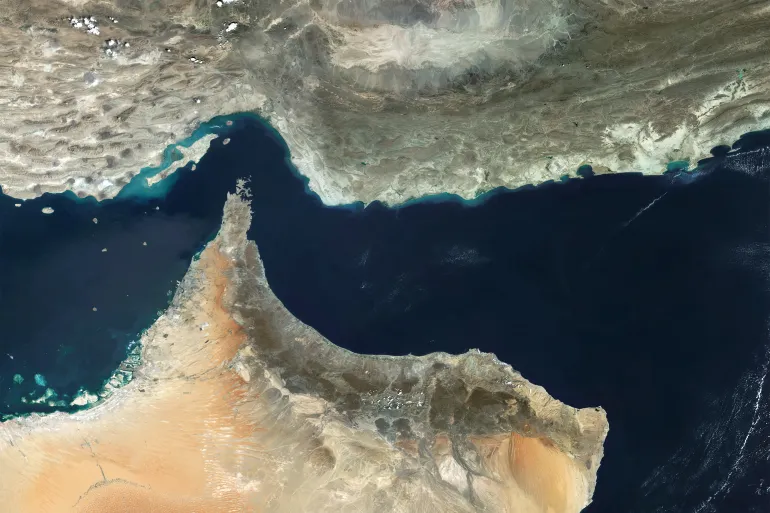
The immediate consequence has been a sharp increase in oil prices, heightened volatility in financial systems, and growing concerns over inflation and economic slowdown. This crisis has once again underscored the strategic importance of the Middle East in ensuring global energy security. Critical chokepoints such as the Strait of Hormuz, through which nearly one-fifth of global oil supply passes, have become focal points of risk, amplifying fears of prolonged supply disruptions. At the same time, the limited capacity of alternative producers outside the region to offset these losses has exposed structural vulnerabilities in the global energy system.
Beyond energy, the conflict has begun to strain global supply chains, increase transportation and insurance costs, and pressure governments to adopt emergency economic measures. In this context, the current crisis not only mirrors past energy shocks but also reflects a more complex and interconnected global economy, where geopolitical instability can trigger cascading effects across multiple sectors.
Global Impact of the Middle East War on the Oil Market
The Oil Market Report (March 2026) highlights that the war in the Middle East has triggered the most severe supply disruption in the history of the global oil market, with far-reaching consequences for energy systems, economic stability, and international trade. The conflict has critically affected the Strait of Hormuz one of the world’s most vital energy chokepoints—where oil flows have collapsed from approximately 20 million barrels per day (mb/d) prior to the war to minimal levels. With limited alternative routes available and storage facilities nearing capacity, Gulf producers were forced to cut production by at least 10 mb/d in March alone.
As a result, global oil supply is projected to decline by around 8 mb/d, marking an unprecedented supply shock. Although the overall impact will depend on the duration and intensity of the conflict, projections indicate that global supply may increase by only 1.1 mb/d on average in 2026, with all growth coming exclusively from non-OPEC+ producers. This underscores the limited capacity of the global system to compensate for disruptions originating in the Middle East.
The crisis has also severely disrupted global refined product markets. Export flows through the Strait of Hormuz have nearly come to a halt, despite Gulf countries having exported approximately 3.3 mb/d of refined products and 1.5 mb/d of LPG in 2025. Additionally, more than 3 mb/d of regional refining capacity has already been shut down due to direct attacks and the absence of viable export channels, further tightening global supply chains.
In response, member countries of the International Energy Agency (IEA) agreed on 11 March to release 400 million barrels of oil from emergency reserves to stabilize markets. At the time, global oil inventories stood at approximately 8,210 million barrels, the highest level since February 2021, distributed across OECD countries (50%), Chinese crude stocks (15%), oil in transit (25%), and other non-OECD nations.
Despite these mitigation efforts, the broader economic outlook remains fragile. Elevated oil prices and heightened uncertainty are placing additional pressure on global economic growth. Forecasts for oil demand have been revised downward, with global consumption expected to increase by only 640 kb/d in 2026 210 kb/d lower than previous estimates.
Oil prices have exhibited extreme volatility since the outbreak of hostilities, particularly following the joint U.S.–Israeli airstrikes on Iran on 28 February. Brent crude surged to nearly $120 per barrel, before easing to around $92 per barrel, still reflecting a significant monthly increase of approximately $20. This price instability continues to fuel inflationary pressures and amplify risks of a broader global economic slowdown.
Middle East and Gulf Region
The Middle East remains the epicenter of the energy crisis. Limited shipping capacity and full domestic storage have forced Gulf producers to curtail 8 mb/d of crude and 2 mb/d of condensates and NGLs, with major reductions in Iraq, Qatar, Kuwait, the UAE, and Saudi Arabia. The closure of the Strait of Hormuz has disrupted export-oriented refineries, putting over 4 mb/d of refining capacity at risk.
Diesel and jet fuel markets are particularly vulnerable due to limited alternatives, while falling LPG and naphtha supplies have forced petrochemical plants to cut polymer production, affecting cooking and heating fuels in India, East Africa, and other dependent regions. These disruptions have contributed to a downward revision in global oil demand growth by over 1 mb/d for March–April and 210 kb/d for 2026.
China: Between Energy Shock and Geopolitical Turbulence
The ongoing Israeli-U.S. offensives against Iran have triggered a severe energy shock, raising concerns across global markets due to tightening oil and gas supplies. As the “factory of the world,” China would be expected to feel this pressure acutely, given that roughly half of its crude oil and condensate imports originate from Gulf producers, including Iran, Saudi Arabia, Iraq, and others. At the center of global attention is the blockaded Strait of Hormuz, a critical chokepoint through which about 20 percent of global oil and liquefied natural gas (LNG) trade passes approximately 80 percent of it destined for Asia.
Yet, in the weeks following the conflict’s outbreak on February 28, Beijing has projected a notable sense of confidence. By contrast, several East Asian economies have experienced significant turbulence. South Korea, for example, saw a sharp stock market sell-off, and the Korean won weakened to levels not seen since the Global Financial Crisis. Chinese markets, however, have remained comparatively stable, with neither major stock indices nor the currency experiencing similar volatility.
China’s energy interests in the Middle East are not overly dependent on Iran. According to 2024 data, Iran accounts for roughly 11 percent of China’s crude oil and condensate imports. Meanwhile, Beijing maintains substantial energy ties with Gulf Cooperation Council countries, including Saudi Arabia (14 percent), Oman (7 percent), and the United Arab Emirates (6 percent). The remaining 46 percent of China’s oil imports come from Russia, the Western Hemisphere, and Africa. In other words, while Iran is an important supplier, it is not indispensable to China’s broader energy strategy. Even in the unlikely event of regime change in Tehran, Beijing would lose a partner but not the foundation of its overall energy security.
The more significant concern for China lies in its long-term strategic interests. A prolonged conflict that damages infrastructure across Iran and neighboring states threatens not only energy flows but also the future of China’s Belt and Road Initiative. Key rail and road corridors linking Iran to Türkiye and Central Asia central to Beijing’s vision of deeper Eurasian integration—have already been disrupted, if not entirely severed. Moreover, Chinese-funded infrastructure projects in the region, including data centers and high-tech developments, could become targets in any future escalation.
The European Energy Challenge
While the physical availability of oil and gas to the European Union remains stable in the short term, the broader energy landscape is far from secure. The convergence of supply shocks, market volatility, and rampant speculation has produced a series of tangible economic consequences that threaten the continent’s fiscal stability.
On March 3, 2026, benchmark gas prices in Europe surged to a staggering €65.79 ($76.19) per MWh more than double the three-year average of €30.00 ($34.74) per MWh.
Importantly, Europe’s price surge has outpaced global trends, exceeding the +39% increase observed in Asian markets. This widening price gap functions as a “competitive tax” on European industries, making it increasingly difficult for local manufacturers to compete with global rivals benefiting from lower energy costs.
Italy’s LNG Dependency and Fiscal Vulnerability
Italy serves as a prime example of the risks associated with concentrated energy reliance. With natural gas accounting for over one-third of its total energy consumption, any market fluctuation is felt immediately across its economy. Italy currently holds a short-term advantage, with natural gas stocks at 48%, well above the EU average of 30%. While this surplus provides a temporary buffer against immediate supply shocks, it does not address long-term fiscal risks.
The EU requires member states to refill gas storage to at least 90% capacity by November each year. For Italy, meeting this target presents a significant financial challenge, as the country ended 2025 with a public deficit of 3.1% of GDP, exceeding the EU’s allowable threshold. If energy prices remain elevated, the cost of securing the remaining 42% of gas at crisis-level prices could place the national budget under severe strain, potentially forcing difficult trade-offs in public spending. The crisis has shifted from a question of physical supply to one of fiscal endurance. Italy may have the gas, but whether it can afford to refill its reserves without destabilizing its economy remains the defining challenge of 2026.
LNG accounts for 25% of Italy’s gas imports, with nearly half of this supply coming from Qatar in 2024, highlighting the country’s direct exposure to geopolitical instability in the Gulf. While Algeria and Libya offer proximity and shorter transport routes, they remain complementary rather than primary solutions. Regional political instability, combined with long-term contracts with Qatari and U.S. suppliers, limits Italy’s ability to pivot fully to these Mediterranean neighbors.
Europe’s New Energy Reality: From Dependency to Radical Transformation
As of 2026, the European energy landscape has undergone a tectonic shift. What began as a desperate scramble to replace Russian pipeline gas has evolved into a complex, multifaceted crisis affecting every aspect of the continent’s socio-economic fabric. Europe now finds itself at a crossroads, balancing the immediate fragility of global supply chains with the long-term goal of achieving “strategic autonomy.”
While Europe has successfully pivoted away from Russian pipeline gas, it has become heavily reliant on Liquefied Natural Gas (LNG). Floating storage and regasification units (FSRUs) have played a critical role in this transition Spain currently has excess capacity, while Germany continues to expand its infrastructure. Europe now competes directly with Asian markets, including Japan, China, and South Korea, for the same LNG shipments, triggering bidding wars that keep prices highly volatile. High energy costs are no longer just a household concern—they pose a structural threat to the European economy. Industrial sectors such as chemical, steel, and fertilizer production, exemplified by companies like BASF and Yara, are relocating operations to the U.S. or the Middle East, where energy is more affordable. At the same time, rising import costs are transforming traditionally export-heavy economies, like Germany, into trade-deficit nations.
By 2026, renewable energy is increasingly framed as a matter of economic and strategic freedom rather than simply climate policy. The European Hydrogen Backbone, a plan to repurpose existing gas pipelines to transport hydrogen from North Africa and the North Sea, illustrates this shift. Grid modernization is also critical to managing intermittency challenges, ensuring electricity can flow across borders when solar or wind generation is uneven.
Governments face growing fiscal strain as they attempt to shield citizens from soaring energy bills, with policies varying across Europe for example, France has implemented price caps while Germany relies on subsidies. Rising energy costs are also contributing to political shifts, fueling the growth of populist movements across the EU.
As Europe moves away from oil and gas, it is becoming dependent on a new set of imports. Critical minerals such as lithium and cobalt, necessary for wind turbines and electric vehicle batteries, are largely processed in China. To reduce this dependency, the Critical Raw Materials Act (CRMA), legislated between 2024 and 2026, aims to mine and process these materials within Europe, ensuring the continent does not simply replace one reliance on Russia with another on China.
Oil Service Companies Under Pressure
Global oilfield service companies are bracing for a decline in profits amid the fallout from the war with Iran, which has disrupted energy infrastructure across large parts of the Middle East. At the same time, producers are hesitant to start new drilling operations until they are confident that elevated oil prices will be sustained.
Brent crude has surged by 53% since February 27, one day before the U.S. and Israeli airstrikes on Iran. Normally, rising commodity prices would boost the profitability of oil and gas projects, increasing demand for drilling rigs and specialized labor. However, the current situation is different: security risks and infrastructure damage have sharply reduced activity, leading to lower demand for oilfield services and equipment in one of the world’s key energy-producing regions.
The suspension of rigs in the Gulf, the slowdown in hiring specialized personnel, and rising transportation and insurance costs have all disrupted operations, delayed projects, and reduced operating rates. According to estimates from Rystad Energy, the number of offshore rigs a key indicator of future production—has fallen by approximately 39%, reaching 72 rigs in the Gulf as of March 27.
The impact on oilfield services companies was immediate. Regional activity declined while producers elsewhere adopted a cautious stance. U.S. producers attending the CERAWeek conference in Houston emphasized that oil prices would need to remain elevated for several months before new drilling rigs could be deployed.
Halliburton and Baker Hughes are among the companies most exposed to developments in the Middle East, while smaller competitors that invested in the region in recent years are also under pressure. UK-based Borr Drilling has placed four drilling rigs on standby across Saudi Arabia, the United Arab Emirates, and Qatar, and has evacuated staff from one of its sites.
Recommendations to Address the 2026 Global Energy Crisis
To address the 2026 global energy crisis, European and other energy-importing nations should prioritize diversifying supply sources and strengthening strategic reserves. Reducing reliance on any single region, particularly the Gulf and Russia, is essential, while expanding strategic petroleum reserves (SPR) and LNG storage capacities can provide a buffer against sudden disruptions. Coordinated storage targets and sharing agreements among member states can further mitigate regional vulnerabilities, as illustrated by Italy’s fiscal constraints on LNG refilling. At the same time, investment in renewable energy and hydrogen infrastructure should be accelerated, with an emphasis on solar, wind, and offshore capabilities to reduce long-term dependency on fossil fuels. The European Hydrogen Backbone plan, repurposing gas pipelines to transport hydrogen from North Africa and the North Sea, alongside cross-border electricity grid modernization, will help manage intermittency and ensure energy sharing during periods of low renewable generation.
Supporting industrial and economic resilience is also critical. Fiscal and policy measures should shield energy-intensive industries, including chemical, steel, and fertilizer sectors, from price shocks to prevent relocation and preserve European production capacity. Targeted subsidies, tax incentives, and energy efficiency programs can further support these industries, while monitoring trade balances helps mitigate the “competitive tax” effect from high energy costs relative to global markets. Geopolitical risk management must be enhanced through international collaboration to secure maritime chokepoints, such as the Strait of Hormuz, using convoy systems, monitoring mechanisms, and insurance frameworks. High-level diplomatic efforts are required to de-escalate conflicts in the Gulf, restore energy flows, and develop contingency plans for sudden disruptions, including alternative shipping routes and emergency fuel swaps.
Strengthening domestic critical mineral supply chains is equally important. Enforcing the Critical Raw Materials Act (CRMA) to mine, refine, and process lithium, cobalt, and other essential materials within Europe reduces reliance on China, while recycling programs and R&D into alternative battery chemistries further diversify supply. Oilfield service operations exposed to Middle East instability should be supported through risk mitigation measures, including insurance, crisis response planning, and workforce protection, alongside encouraging investment in lower-risk regions. Finally, consumers must be protected and fiscal risks managed through short-term interventions, such as price caps, subsidies, and targeted financial support, while promoting energy efficiency programs to reduce household and industrial consumption and mitigate the impact of volatile global prices.
Leave a comment