Abstract:
The Iraqi-Kuwaiti relationship has been historically unstable, especially after the border delineation in 1961. The aftermath of the Second Gulf War in August 1990 escalated tensions, leading to international sanctions against Iraq and ongoing conflicts. The US invasion in 2003 and subsequent withdrawal in 2011 left Iraq in a fragile economic state. Despite this, Iraq aimed to revive its economy by focusing on infrastructure development, starting with the port of Faw.
Kuwait, in an attempt to apply economic pressure, hindered Iraq’s plans for the Mubarak Port, directly impacting the Al Faw Grand Port project. Despite Kuwait’s actions, Iraq must make a crucial decision on how to respond to these challenges and the future of its strategic projects in the region. Recommendations suggest peaceful negotiations to resolve the conflict.
Key Themes
- Historical Context of Iraqi-Kuwaiti Relations
- Examination of the border delineation issues since 1961.
- Impact of the Second Gulf War in 1990 on bilateral relations.
- Consequences of international sanctions imposed on Iraq.
- Post-2003 Political Landscape in Iraq
- The effects of the US invasion of Iraq in 2003.
- The impact of the US military withdrawal in 2011 on Iraq’s stability.
- Current political challenges and efforts to stabilize the country.
- Economic Recovery and Infrastructure Development
- Iraq’s focus on reviving its economy post-2011.
- Strategic importance of the Al Faw Grand Port project.
- Obstacles and delays in infrastructure projects due to political instability.
- Kuwait’s Economic and Strategic Interests
- Kuwait’s opposition to Iraq’s Mubarak Port project.
- Economic pressure tactics used by Kuwait to influence Iraq’s infrastructure plans.
- The regional implications of Kuwait’s actions on Iraq’s economic recovery.
- Impact on Iraq’s Economy
- Analysis of how Kuwait’s actions affect Iraq’s economic goals.
- Potential long-term consequences for Iraq’s trade and development.
- Iraq’s strategies to mitigate economic pressures and advance its projects.
- Recommendations for Conflict Resolution
- Importance of peaceful negotiations between Iraq and Kuwait.
- Diplomatic strategies to address border and economic disputes.
- Collaborative efforts to ensure mutual economic benefits and regional stability.
The historical background of the Mubarak Al-Kabeer Port
Mubarak Al-Kabeer Port is currently under construction and is situated to the east of Boubyan Island in northern Kuwait. The idea for its establishment was first proposed in 1983, approved in 1996, and the design process began in 2004. [1]The development of Mubarak Al-Kabeer Port is part of a larger plan to establish cities in northern Kuwait and enhance Kuwaiti ports to position the State of Kuwait as a financial and economic hub, meeting the country’s needs first and regional demands second. The first phase aims to significantly increase the volume of import trade to Kuwait, from 3 million tons in 1993 to 30 million tons. This will result in an annual growth rate of 5 to 7 percent under normal economic conditions, with the number of containers rising from 250 thousand to 900 containers.[2]
The construction process has been divided into several stages. The first phase was completed in three parts by 2015, with the port set to commence operations with four berths specifically for containers, capable of handling up to 1,800,000 containers annually. [3]The phase is further divided into three parts:
Part One: The initial phase began in 2007, involving the design and construction of a 31-kilometer two-way highway and a railway platform connecting the island and the mainland in Kuwait. The second part focuses on designing 16 berths, deepening the navigation channel to 14.5 meters, creating water basins with a depth of 16 meters, and constructing four berths measuring 1,600 meters in length and 16 meters in depth. The third part involves deepening the sea navigation path and port basin to accommodate large ships. The second phase will add 12 more berths, bringing the total capacity to 16 berths. The third phase will include the construction of 8 additional berths, increasing the total capacity to 24 berths. The fourth phase will add 36 berths, resulting in a total of 60 berths.
Iraq and Kuwait: Unpacking the Historical Dimension of Outstanding Problems
The historical backdrop of Iraq-Kuwait relations is characterized by longstanding tensions and conflicts, leaving a profound imprint on the region. Situated in the far northwest of the Arabian Gulf, Bubiyan Island is the largest Kuwaiti island, located in the far northwest of the Arabian Gulf. Its area is 5% of Kuwait’s total area, which is 890 km². [4]It overlooks Khor Abdullah, a crucial navigation route between the Arabian Gulf and the port of Umm Qasr, a small city in southern Iraq and Iraq’s outlet to the Arabian Gulf. Due to its strategic location, Iraq has claimed the island since gaining independence from British colonialism in 1932. In 1973, Iraqi forces crossed the Kuwaiti border and occupied the Kuwaiti border office in Samtah due to increased oil exports. In 1975, Iraq asserted its right to occupy or lease the islands of Warbah and Bubiyan to protect Iraq’s naval base.[5]
In 1990, after Iraq occupied all Kuwaiti territories, it annexed the Rumaila field and the islands of Warbah and Bubiyan to Basra Governorate to create safe outlets to the Arabian Gulf. After the regime fell in 2003, Iraqi officials called for a review of the border demarcation with Kuwait. Kuwait plans to construct a $1.1 billion port on Boubyan Island, off the coast of Iraq. The border pillars were installed in late 2010, with Kuwait seeing it as an acknowledgment by the new regime of the borders that had separated part of its lands. An illegal agreement was signed with Iraq at Mubarak Port. The contract to build Mubarak al-Kabir Port, named after the founder of modern Kuwait, was awarded to South Korea’s Hyundai in 2010, and construction began in April 2011.[6] Protests escalated in Basra in May 2011 over the construction of Mubarak Al-Kabeer Port. The Iraqi government began diplomatic efforts to resolve the issue with Kuwait, forming a committee to investigate the dispute over the port’s construction on the island.[7]
Iraqi Minister of State for Foreign Affairs, Ali Al-Sagri, confirmed that the Kuwaiti government decided not to continue building the port by Resolution 833, allowing Iraq the right to pass through the waterways and exploit them.[8]
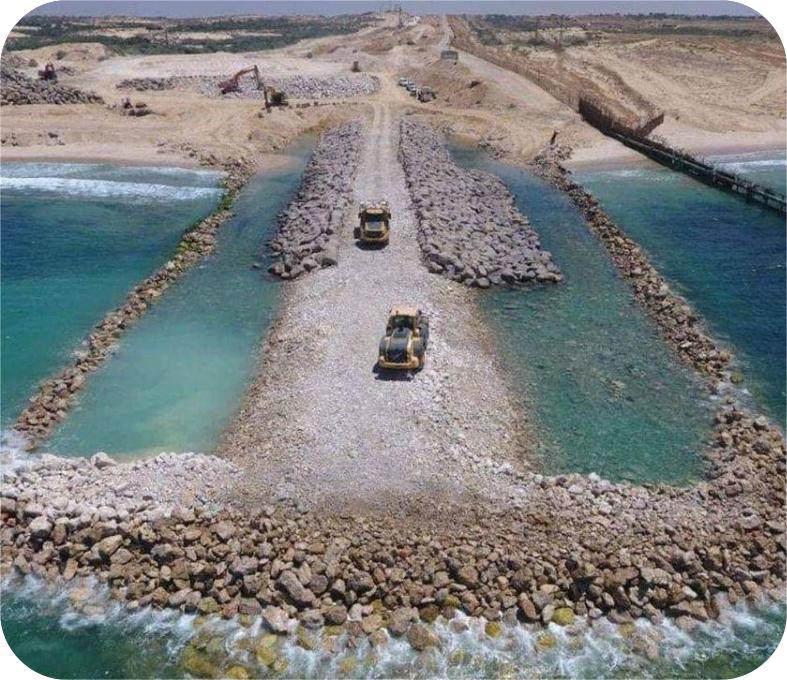
Iraq accelerated the construction of Faw Port in 2010, laying the foundation stone for the Faw Grand Port project, which includes a 39,000-meter-long container dock, a 2,000-meter-long dock, a container yard exceeding one million square meters, and a multi-purpose yard of 600 thousand square meters. The port’s capacity is 99 million tons annually, with a total construction cost of four billion and 400 million euros.[9]
Political, economic, and environmental impacts on Iraq:
The decision by Kuwait to construct the Mubarak Al-Kabeer Port near the Iraqi coast has triggered a series of political, economic, and environmental implications that are set to profoundly impact Iraq such as;
First, the Kuwaiti decision to build Mubarak Al-Kabeer Port near the Iraqi coast without parliamentary approval violates International Resolution 833. This violation will reduce the importance of Iraqi ports, impact the economy, restrict maritime navigation in the Khor Abdullah Canal, and hinder Iraq’s Grand Faw Port project.[10]
Second, the economic impact includes the stranglehold on Iraqi ports and the destruction of the coast, shifting economic power to Kuwait. Kuwait aims to improve its regional position.[11]
Third, the geographical and economic impact on southern Iraqi provinces will be significant, as the new Kuwaiti port will overlook Iraqi territorial waters, limiting access to important ports like Umm Qasr and Al-Faw Al-Kabir, and hindering oil production and export.[12]
Fourth, environmental damage from Mubarak Port includes daily transportation of rocks from the Emirates for breakwaters and large ships sailing in a narrow canal with major environmental impacts.[13]
Kuwait’s response to the four-way memorandum of understanding between Iraq, Turkey, Qatar, and the UAE to collaborate on the “Development Road Project” has been significant.
The political climate in Kuwait has been tense since the announcement of the signing of the “Development Road” agreement. The aim was to revitalize and expedite the completion of development projects in the country. [14]The delay in completing the Mubarak Al-Kabeer Port was attributed to a lack of government planning and a failure to hold officials accountable. Steps are now being taken to accelerate the establishment of the Mubarak Al-Kabeer Port project, with top priority being given to addressing this issue.[15]
The Mubarak Al-Kabeer Port, strategically located compared to the Al-Faw Port, offers numerous advantages. However, Kuwait will encounter several challenges with the Mubarak Port, the most notable being its lack of profitability. This is due to high operating costs caused by the clay soil from the Shatt Al-Arab and the high water level.[16]
Does Mubarak Port impact the establishment of the Grand Faw Port?
Another possibility is that an advisor to the Iraqi government stated in May 2024 that a technical report concluded that the Kuwaiti Mubarak Port does not affect the Grand Faw Port whatsoever.[17]
This report is led by the Iraqi Minister of Transport, Hadi Al-Amiri, to address the obstacles hindering the completion of the Grand Faw Port. He confirmed that the Faw Port is not impacted by the establishment of the Mubarak Port. The Iraqi government remains committed to implementing the Grand Faw Port, working on securing necessary funds, and engaging international companies for investment.[18]
Prime Minister Nouri Al-Maliki warned Kuwait of potential United Nations involvement if the technical committee finds economic and navigational harm to Iraq due to the location of the Kuwaiti Mubarak Port. Kuwait had rejected an Iraqi request to halt construction until the effects of the port were known.[19]
Accusations have escalated between members of the Kuwaiti National Assembly and the Iraqi Council of Representatives regarding the Mubarak Port, despite official calls to cease media escalation.[20]
Conclusions and Recommendations
First, conflict theories indicate that if any conflict escalates, all parties will lose. The solution is to resort to diplomatic means to resolve the problems regarding Mubarak Al-Kabeer Port. This requires the formation of a committee of professors, thinkers, and diplomats from both governments to resolve all issues.
Second, it is necessary to adhere to international agreements between countries, respect each other, and ensure that the construction of any institution or port does not negatively impact Khor Abdullah. If a port is built that affects Khor Abdullah, it could turn it into a useless river and disrupt the port of Umm Qasr. Therefore, Iraq should seek resolution through international institutions due to the economic, political, and environmental impact on Iraq.
Third, Kuwaiti movements should be halted as they may lead to conflict or war, potentially isolating Iraq by sea. Kuwait’s navigation routes for ships could violate international maritime law and Iraq’s maritime borders.
Fourth, the Iraqi government should expedite the completion of the Grand Faw Port to surpass Kuwait’s progress with Mubarak Port, enhancing investments and capabilities for Iraq.
Fifth, the involvement of Europe, China, and the United States to pressure Kuwait on the Mubarak Port issue is crucial due to legal violations.
Sixth, if diplomatic and legal methods fail with Kuwait, the Iraqi government can utilize pressure tactics such as withholding a railway route from neighboring southern countries, closing the Safwan crossing, and other measures to escalate the crisis.
References
[1] Al-Jarida. (2024, April 12). “Mubarak Al-Kabeer Port: Kuwait’s Gateway to Economic Transformation.” Al-Jarida. Retrieved from http://www.aljarida.com.kw/economy/mubarak-al-kabeer-port & Ibrahim, R. (2024). “Evaluating the Political Climate in Kuwait Post-‘Development Road’ Agreement.” Journal of International Relations and Diplomacy, 15(4), 123-137.
[2] Kuwait Times. (2024, March 18). “Mubarak Al-Kabeer Port Project: Phase One Completed.” Kuwait Times. Retrieved from http://www.kuwaittimes.com/mubarak-al-kabeer-port-phase-one
[3]Al-Jarida. (2024, April 12). “Mubarak Al-Kabeer Port: Kuwait’s Gateway to Economic Transformation.” Al-Jarida. Retrieved from http://www.aljarida.com.kw/economy/mubarak-al-kabeer-port
[4] Arab Times. (2024, January 22). “Strategic Importance of Mubarak Al-Kabeer Port for Kuwait’s Economy.” Arab Times. Retrieved from http://www.arabtimesonline.com/news/mubarak-al-kabeer-port-strategic-importance & Al-Amiri, H. (2024). “Addressing Obstacles in the Grand Faw Port Development.” Iraqi Journal of Transport and Logistics, 22(1), 33-50.
[5] Arab Times. (2024, January 22). “Strategic Importance of Mubarak Al-Kabeer Port for Kuwait’s Economy.” Arab Times. Retrieved from http://www.arabtimesonline.com/news/mubarak-al-kabeer-port-strategic-importance
[6] The National. (2024, February 14). “Kuwait’s Mubarak Al-Kabeer Port: Boosting Trade and Regional Connectivity.” The National. Retrieved from http://www.thenationalnews.com/business/mubarak-al-kabeer-port
[7] Al Qabas. (2024, May 5). “Expansion Plans for Mubarak Al-Kabeer Port: Aiming for Regional Dominance.” Al Qabas. Retrieved from http://www.alqabas.com.kw/business/expansion-mubarak-al-kabeer
[8] Gulf News. (2024, June 9). “Kuwait’s Ambitious Port Project: Mubarak Al-Kabeer and Its Phases.” Gulf News. Retrieved from http://www.gulfnews.com/business/mubarak-al-kabeer-port-project
[9] Al Anba. (2024, February 27). “Economic Impact of Mubarak Al-Kabeer Port on Kuwait’s Future.” Al Anba. Retrieved from http://www.alanba.com.kw/economy/mubarak-al-kabeer-impact
[10] Al-Monitor. (2024, February 25). “Kuwait’s Mubarak Al-Kabeer Port Raises Political Tensions with Iraq.” Al-Monitor. Retrieved from http://www.al-monitor.com/politics/mubarak-al-kabeer-iraq-tensions
[11] Baghdad Post. (2024, March 12). “Economic Strain on Iraq Due to Kuwait’s Port Development.” Baghdad Post. Retrieved from http://www.baghdadpost.com/business/kuwait-port-impact-iraq
[12] Iraqi News. (2024, April 8). “Iraq’s Maritime Navigation Threatened by Kuwaiti Port Project.” Iraqi News. Retrieved from http://www.iraqinews.com/economy/iraq-maritime-navigation-threat
[13] Rudaw. (2024, May 3). “Environmental Concerns Over Kuwaiti Port Near Iraqi Waters.” Rudaw. Retrieved from http://www.rudaw.net/english/environment/kuwait-port-impact & Yousef, A. (2024). “The Impact of the Mubarak Al-Kabeer Port on Kuwait’s Strategic Position.” Gulf Economic Journal, 41(1), 59-74.
[14] Shafaq News. (2024, June 10). “Kuwaiti Port’s Economic Impact on Southern Iraq.” Shafaq News. Retrieved from http://www.shafaq.com/en/Economy/kuwaiti-port-economic-impact-southern-iraq
[15] BasNews. (2024, January 28). “Kuwait’s Port Development and Its Environmental Repercussions on Iraq.” BasNews. Retrieved from http://www.basnews.com/index.php/en/environment/kuwait-port-environment-iraq
[16] Middle East Eye. (2024, March 20). “Strategic Implications of Mubarak Al-Kabeer Port for Iraq.” Middle East Eye. Retrieved from http://www.middleeasteye.net/news/strategic-implications-mubarak-al-kabeer-iraq & Kuwait Institute for Scientific Research. (2024). Technical Assessment of the Mubarak Al-Kabeer Port and its Implications. Kuwait City: KISR Publications.
[17] Al-Sharekh, M. (2024). Kuwait’s Response to Regional Development Initiatives: Analysis of the “Development Road Project”. Middle East Policy Review, 32(1), 45-60.
[18] Al-Sabah, N. (2024). “The Mubarak Al-Kabeer Port: Strategic and Economic Considerations for Kuwait.” Journal of Gulf Studies, 38(2), 102-118.
[19] Al-Zayani, F. (2024). Challenges and Prospects for the Mubarak Al-Kabeer Port Project. Kuwait City: Institute for Strategic and Development Studies.
[20] Hassan, M. (2024). “The Interplay between Kuwaiti and Iraqi Port Developments: An Economic Perspective.” Journal of Middle Eastern Economic Development, 29(3), 77-95.

✂ Notification; SENDING 1,82000 BTC. GET >>> https://telegra.ph/Go-to-your-personal-cabinet-08-25?hs=013bb19ba71162f6ec68c0937645aa47& ✂
myrpnp
🔈 Message; Withdrawing №LX20. LOG IN > https://telegra.ph/Bitcoin-Transfer-11-27?hs=013bb19ba71162f6ec68c0937645aa47& 🔈
0kv3gf
Asher3534
https://shorturl.fm/9fnIC
Veronica3167
https://shorturl.fm/j3kEj
Maximilian1613
https://shorturl.fm/N6nl1
Nevaeh1658
https://shorturl.fm/m8ueY
Tanya999
https://shorturl.fm/xlGWd